
Library
ImageVerity blog and guides
Practical articles about AI-image review, provenance, metadata, detector signals, and real operational workflows.
All articles
Latest writing
17 articles on image provenance, metadata, detector disagreement, and review workflows. Newest first.
AI image detection tools compared: what each one actually answers
A practical comparison of reverse image search, provenance checks, metadata inspection, and detector tools, and which question each one is built to answer.
AI images in identity checks: why KYC and voter rolls fail differently
ai images identity verification
Handling non-consensual AI images: a review workflow for the hardest cases
non-consensual ai images

Tracing who is behind an AI image: what the evidence can and cannot show
tracing ai image origin

AI image fraud in insurance claims: what reviewers can actually check
ai image fraud insurance claims

When is a platform obligated to act on an AI image?
platform obligation ai image
Reviewing AI images in political ads: what the rules actually require
ai images in political ads
Deepfake vs AI-generated image: what is actually different
Deepfakes target a specific person. AI-generated images are a broader category. The distinction changes which checks are worth running and how much a detector score can tell you.
Why screenshots destroy image evidence
A screenshot is a new image, not a copy. Here is what it removes, what survives, and why detectors produce wrong verdicts on screenshotted files in both directions.

Reverse image search vs AI detection: they answer different questions
Reverse image search finds where an image was published. AI detection measures whether the file looks camera-native. They answer different questions and fail in different ways.
How to tell if a photo is AI-generated: 7 checks anyone can run
Seven checks you can run yourself to judge whether a photo is AI-generated, from visual artifacts to C2PA manifests, and why no single detector score settles it.
When AI edits make real photos look fake
ai edits make real photos look fake

What Google's SynthID and C2PA expansion means for verifying AI images
Google's May 19, 2026 transparency update expands SynthID and C2PA verification into Search and Chrome. Here is what that changes for AI-image verification in real workflows.
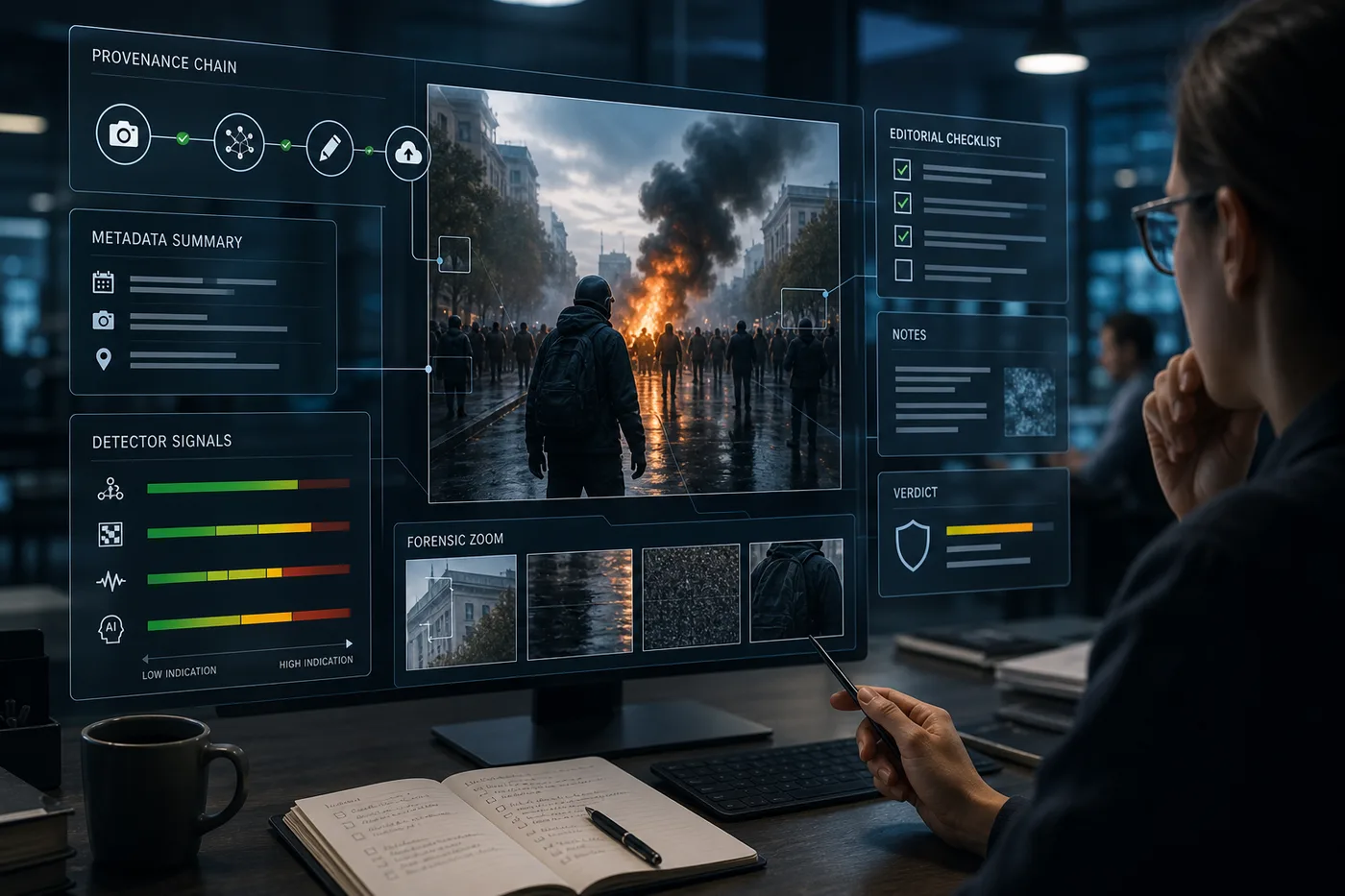
How newsrooms should verify suspicious AI images after provenance updates
How newsrooms should verify suspicious AI images after provenance updates, and what provenance, EXIF, detector scores, and manual review each can and cannot prove.

What OpenAI's provenance update means for verifying viral AI images
A news-led explainer on OpenAI's provenance update from May 19, 2026, what provenance, EXIF, and detector scores can actually prove, and how teams should review suspicious viral images without overclaiming.
OpenAI's May 19 provenance update changed how we should verify viral AI-image claims
A news-led explainer on OpenAI's May 19, 2026 provenance update, what C2PA and SynthID can actually prove, and how to verify suspicious viral images without overclaiming.
Can AI image detectors be wrong?
AI image detectors can be wrong. This guide explains false positives, false negatives, and the review workflow teams should use instead of trusting one score.